 EN
EN  IT
IT  DE
DE  FR
FR  AR
AR  ES
ES  NL
NL 
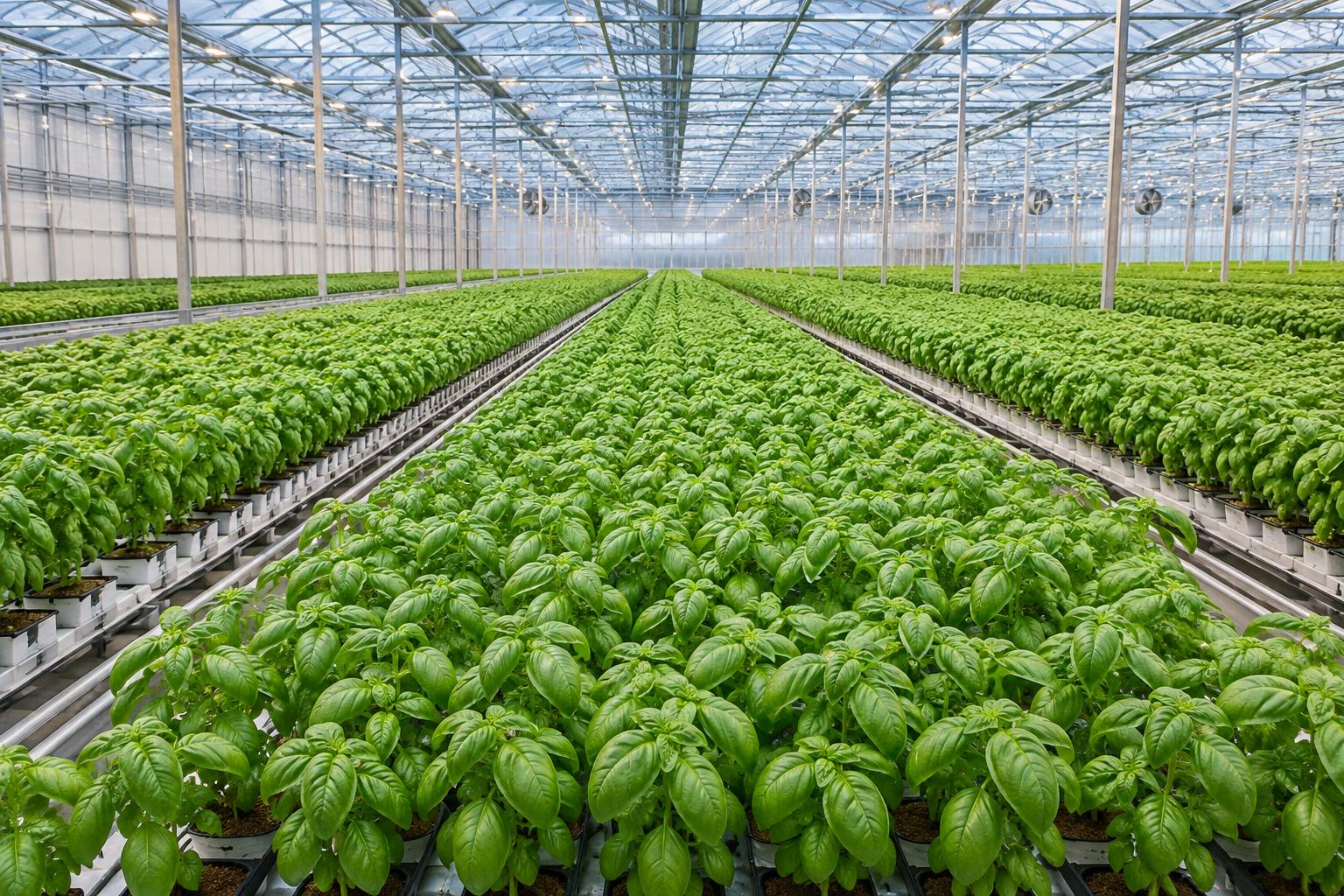
Growing Herbs
Growing Herbs: The Right Nutrition for Healthy Herbs
Growing herbs requires an optimal balance between growth, quality, and yield. Whether it’s basil, parsley, mint, cilantro, or other herb plants, uniform growth, a deep green leaf color, and consistent quality are essential for a successful end product.
In professional herb cultivation, the challenge lies in achieving high yields without compromising on quality. A balanced nutrient supply for herb seedlings supports vigorous growth, prevents deficiencies, and contributes to uniform crop development throughout the entire growing cycle.
Biota Nutri supports growers with fully soluble fertilizers tailored to the specific needs of herb cultivation, whether in open fields, substrate-based systems, or greenhouse cultivation.
A few tips for fertilizing herbs
Successful herb cultivation starts with a healthy plant and a stable supply of nutrients. Herbs react quickly to nutrient deficiencies, which is why a precise fertilization schedule is important for both yield and quality. The right nutrition for herb plants varies depending on the crop, growth stage, and cultivation system. By tailoring your fertilization to these factors, you’ll get the most out of your herb cultivation.
Key points of interest:
- Ensure a constant supply of nutrients
- Avoid significant fluctuations in EC and watering
- Adjust the nutrition to the crop’s growth stage
- Prevent excessive vegetative growth at the expense of quality
- Regularly monitor the intake of trace elements
In addition, it is important to tailor the fertilization to the type of herb and the chosen growing method. Both indoor and outdoor herb cultivation require a targeted nutrition strategy. Below is a selection of our solutions:
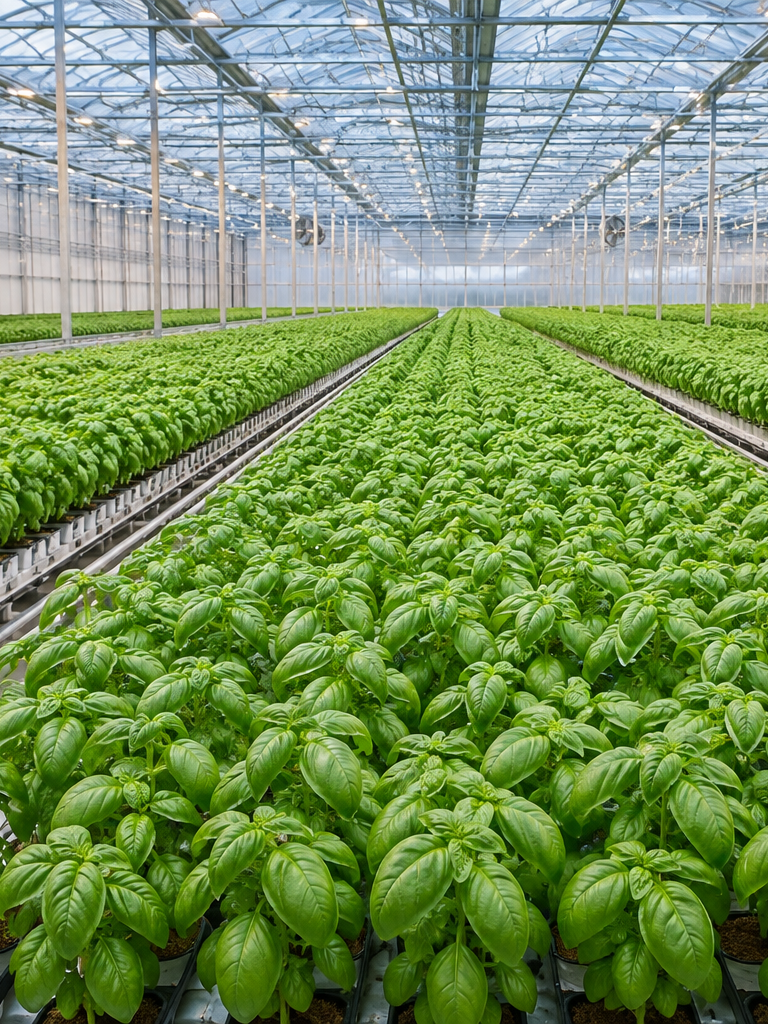
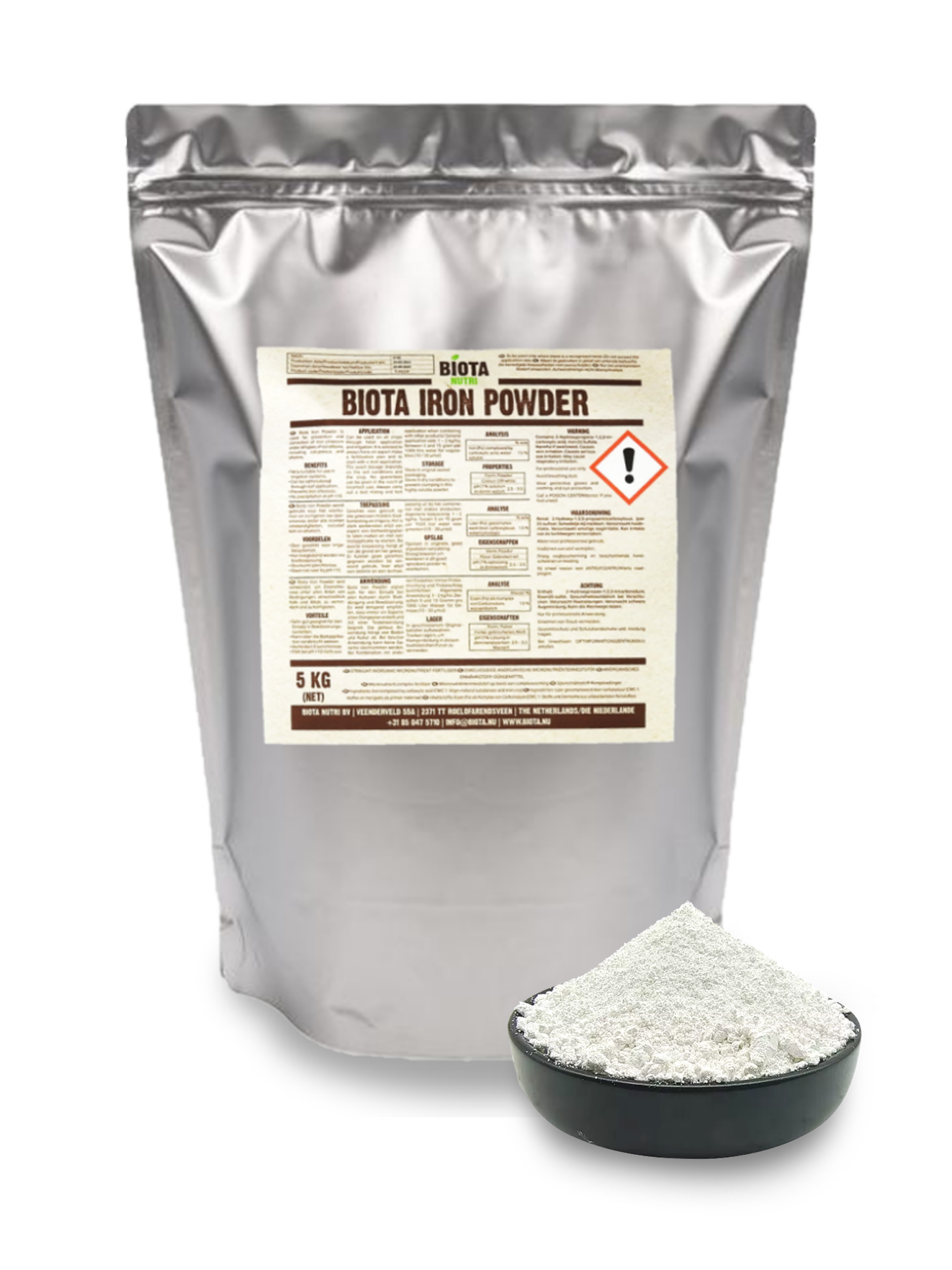

Biota Iron Powder
Iron is crucial for leaf color and vitality. Deficiencies occur in open-field conditions at lower temperatures or higher pH levels.
- promotes chlorophyll production
- ensures a fresh green leaf color
- improves photosynthesis and growth rate
Trace Elements
With Biota Nutri’s trace elements, you can precisely tailor the nutrition of herb plants to the crop’s needs. By adding individual zinc, iron, boron, copper, or manganese fertilizers, deficiencies can be quickly corrected and the nutrient balance remains optimal. This supports healthy growth and consistent crop quality throughout the entire growing season.
- corrects specific nutritional deficiencies
- Tailor nutrition precisely to each growth stage
- Can be used flexibly within any cultivation strategy
Additional Nutrients for Herbs
In addition to basic fertilization, supplemental nutrition for herb plants can help improve crop quality even further. By specifically addressing nutrient deficiencies and optimizing nutrient uptake, herb plants remain vigorous and maintain their uniform growth and leaf quality.
Depending on the growth stage, additional calcium, magnesium, potassium, or iron may be needed to provide optimal support for the plant. Targeted supplementation is often necessary, especially in intensive cultivation and rapid growth cycles.
This contributes to:
- uniform growth
- a deep green leaf color
- higher production
- consistent quality
- a strong and healthy crop
Because every herb crop is different, we always tailor our advice to your crop, growing system, and production goals. This also applies if you’re looking for products that comply with organic regulations.
There are also suitable varieties available for organic growers. Please contact us for personalized advice.
Challenges of Growing Herbs
When growing herbs, the key is to combine high yields with consistent quality. Due to their rapid growth and intensive cultivation, herb plants react quickly to disruptions in the nutrient balance.
Common challenges include:
- Nitrogen deficiency: inhibits growth and causes pale leaf color
- Potassium deficiency: affects the quality and firmness of the leaves
- Calcium deficiency: causes reduced leaf quality and sensitivity
- Magnesium deficiency: causes chlorosis and reduced photosynthesis
- Iron deficiency: causes young leaves to turn yellow
By carefully tailoring fertilization to the crop’s needs, yield and quality remain consistent throughout the growing season.
How Biota Nutri supports growers
Biota Nutri develops circular, plant-based, and fully soluble fertilizers that are perfectly suited to modern herb cultivation. Our fertilizers are produced from waste streams from the food industry and contain no sodium or chlorides.
This makes them ideal for use in a wide variety of cultivation systems, such as:
- greenhouse horticulture
- substrate cultivation
- fertigation
- hydroponics
- field cultivation
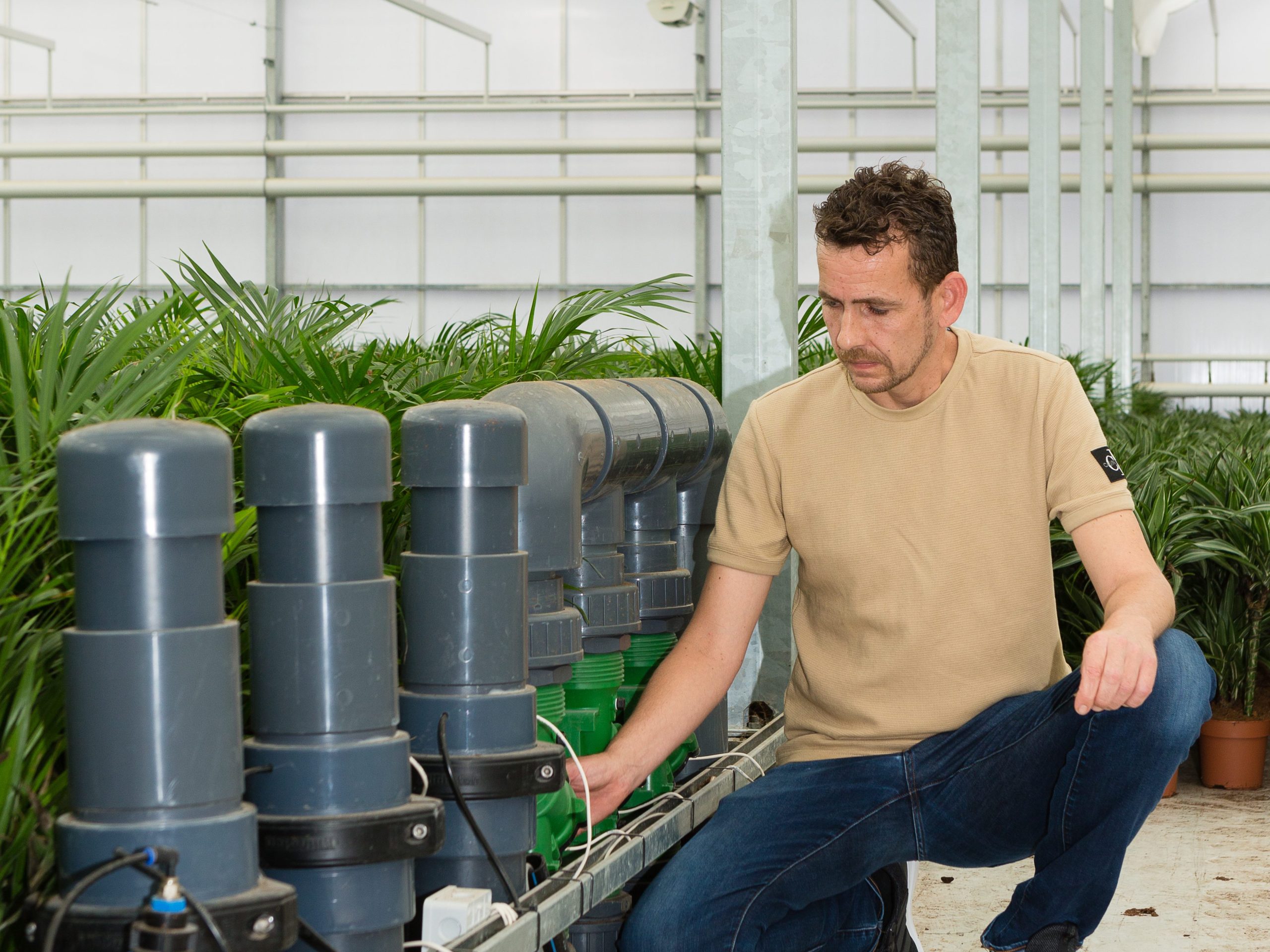
Our approach is a perfect fit for growers who aim to:
- High production volume with consistent quality
- uniform growth of herbaceous plants
- efficient use of nutrients
- a healthy and resilient crop
- Sustainable and Circular Fertilization
Our solutions are used daily by professional growers and are based on practical experience and cultivation expertise.
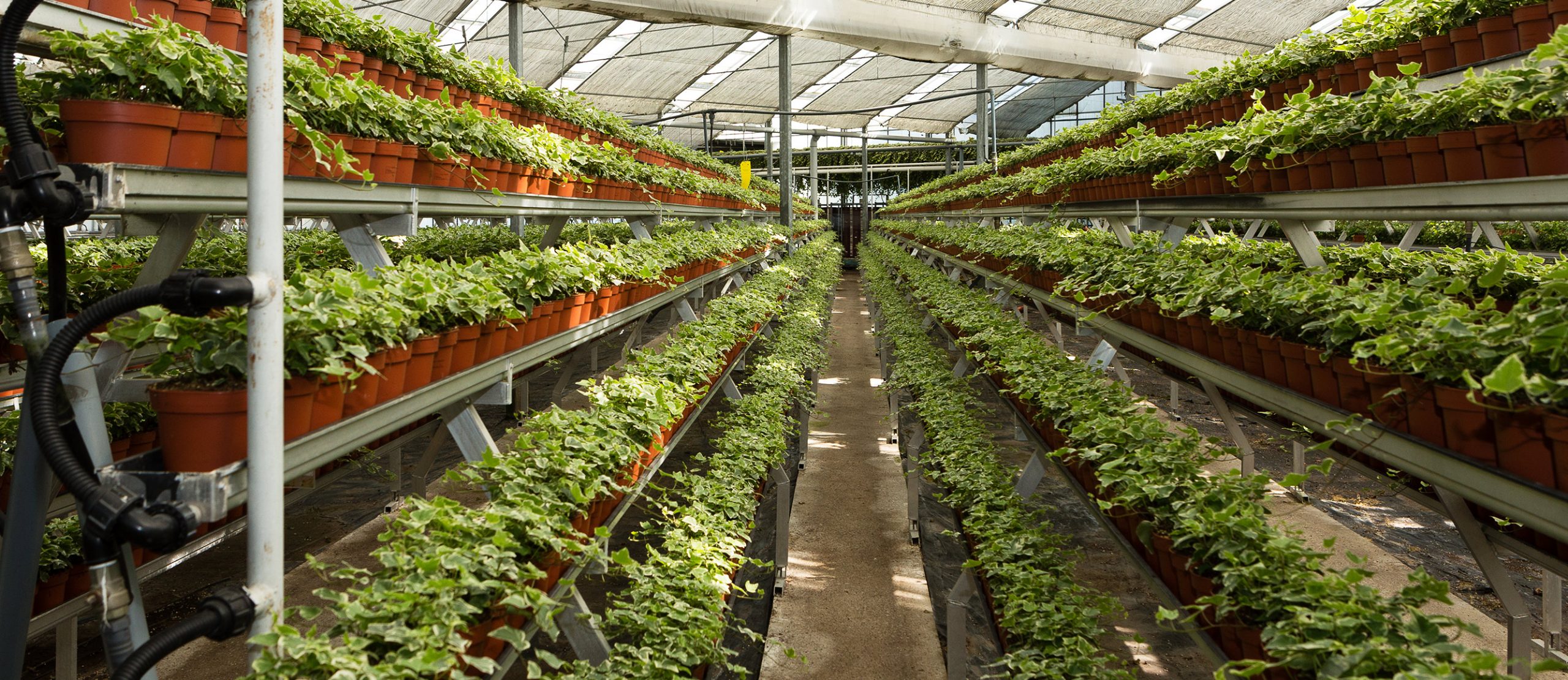
Tips for Growing Herbs
Would you like to further optimize your herb cultivation? Or are you looking for a nutrition strategy that fits your specific growing system?
The specialists at Biota Nutri are happy to work with you to find the right solution. Based on your crop, water quality, fertilization strategy, and growing goals, we’ll put together a tailored nutrition plan.
📩 info@biota.nu
What kind of nutrients do herbs need?
Herbs require a balanced diet containing nitrogen, potassium, calcium, magnesium, and trace elements. The optimal ratio varies depending on the crop and growth stage.
Why is potassium important when growing herbs?
Potassium supports leaf quality and plant vigor and contributes to uniform growth. This is important for both yield and marketable quality.
Can you grow herbs indoors?
Yes. Many herbs are grown commercially indoors in greenhouses or on growing media. A stable irrigation system and a precise fertilization strategy are essential for consistent production.
What challenges arise when growing herbs?
The biggest challenges are combining high yields with consistent quality, preventing nutrient deficiencies, and maintaining healthy leaf color and uniform growth throughout the entire growing season.